
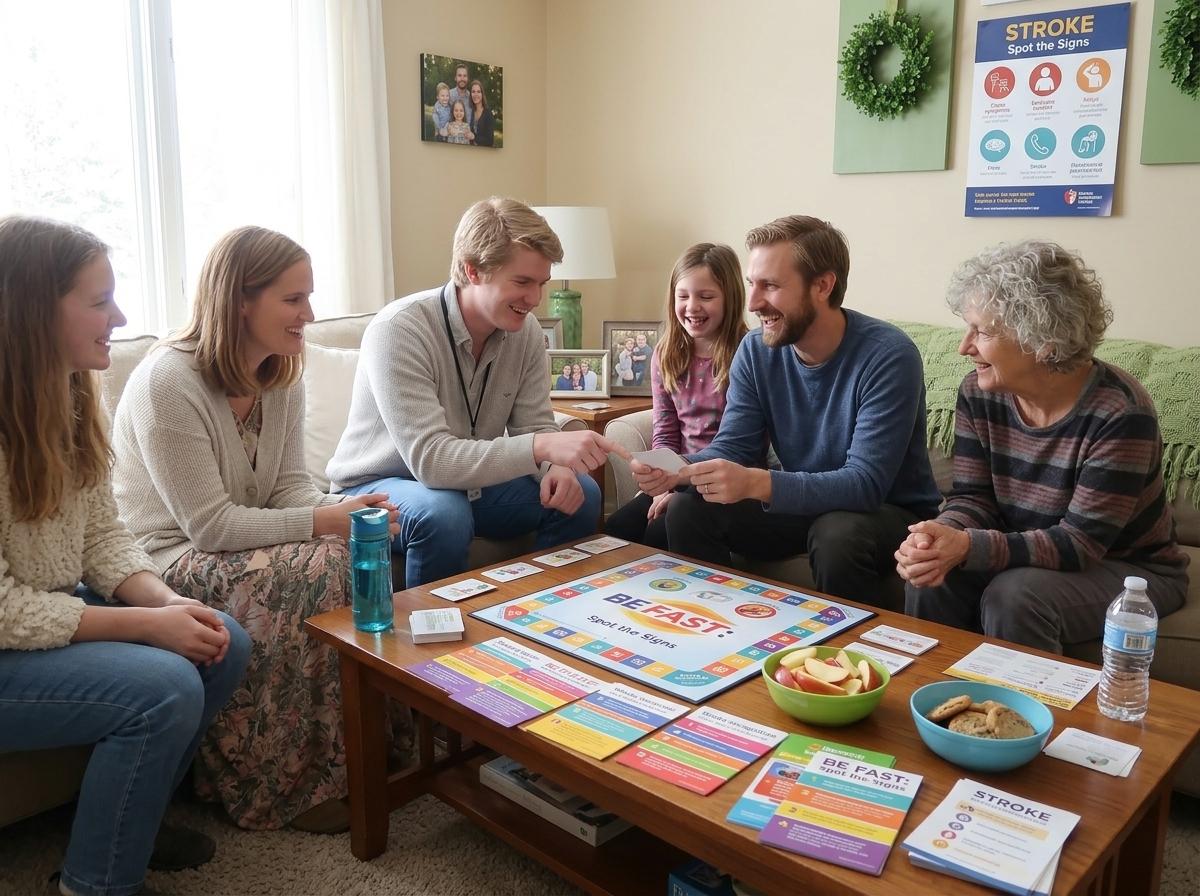
Stroke signs can change a life in minutes. When kids, parents, and grandparents learn B.E.F.A.S.T. together, they gain the power to act fast and save someone they love. This simple family brain health game night blends fun with vital skills, building confidence to call 911 for stroke without hesitation. Keep reading to see how you can bring this game night to your home or community—and make brain health a shared priority. [https://mychn.org/game-night-benefits/]
Why Family Game Night Matters
Family game nights are more than just fun—they’re a chance to learn life-saving skills. By bringing loved ones together, you can teach essential stroke signs in a relaxed setting.
Learn Stroke Signs Together
Knowing the signs of a stroke can make all the difference. During a game night, families can learn what to watch for in a playful way. When everyone understands what stroke symptoms look like, such as face drooping or arm weakness, they are better prepared to respond quickly. Incorporate games that mimic real-life scenarios. For example, a charades-style game where players act out different symptoms can make learning memorable and enjoyable.
Build Confidence to Call 911
Recognizing symptoms is just the start. The real power lies in the confidence to act. Playing games that simulate calling 911 helps reinforce quick decision-making. This practice can reduce hesitation in real situations. Talk through scenarios as a family. Decide who would do what in an emergency, ensuring everyone feels ready to take the lead if needed. This simple exercise empowers each family member to trust their instincts and act fast.
Connect with Support and Resources
Game nights also connect families to broader educational resources. By integrating knowledge about stroke prevention into these events, families can extend their learning beyond the living room. Explore community resources and support groups available for further education and encouragement. Engaging with local stroke awareness organizations can provide ongoing support and access to valuable materials.
Interactive Stroke Education
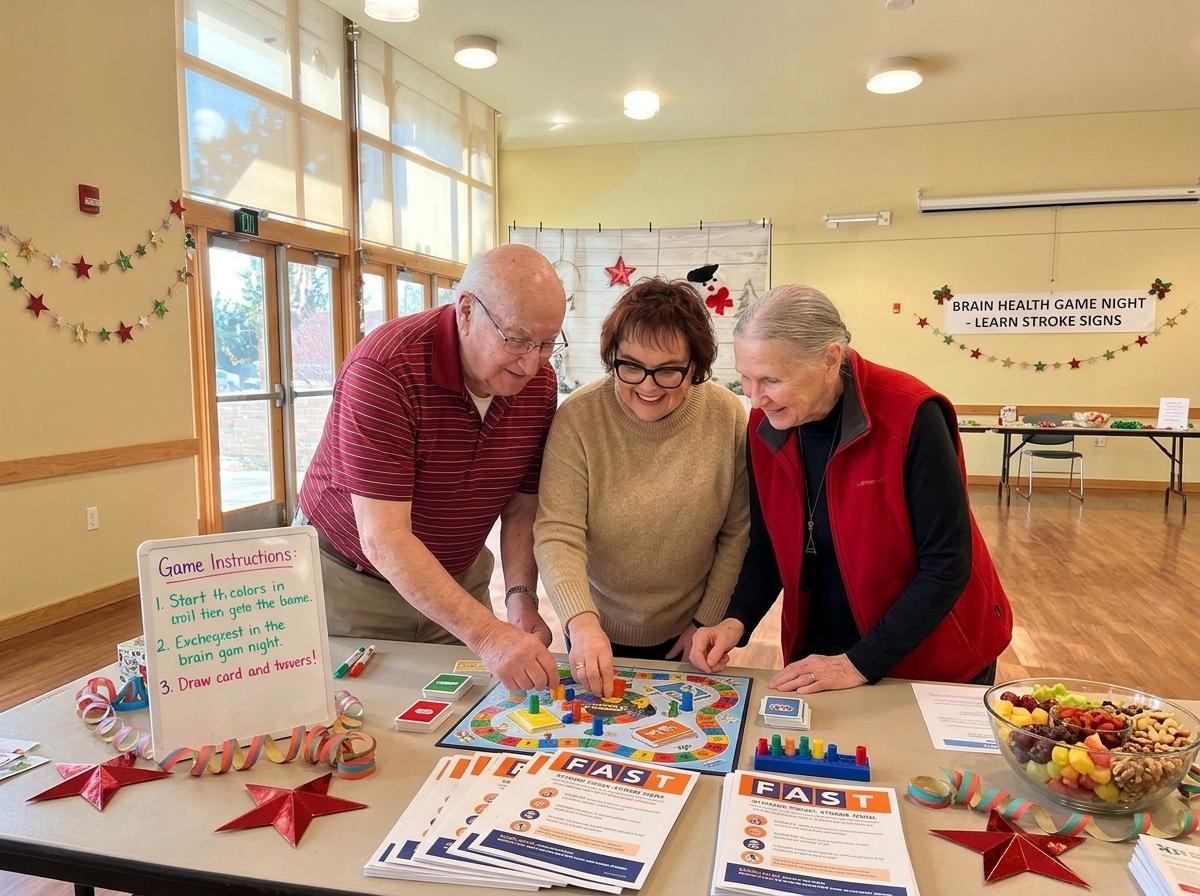
Turning education into a game makes learning about stroke prevention engaging and effective. Here’s how your family can dive deeper.
B.E.F.A.S.T. Explained
The B.E.F.A.S.T. acronym stands for Balance, Eyes, Face, Arms, Speech, and Time. These are key indicators of a stroke. Use games to reinforce each letter. For instance, create a matching game where players pair symptoms with the correct term. This reinforces memory retention. Understanding B.E.F.A.S.T. equips families with the knowledge to recognize strokes as they happen.
Fun Family Game Night Ideas
Make your game night exciting with creative activities. You might host a trivia game focused on stroke facts or design a scavenger hunt with clues related to stroke signs. Invite friends and neighbors to join in. This not only spreads awareness but strengthens community bonds. The more people learn in a fun setting, the more likely they will remember critical information when it matters most.
Simple Home Emergency Plan
A clear plan ensures everyone knows what to do in an emergency. Discuss and write down steps for each family member. Practice your plan like a fire drill, ensuring everyone knows their role. Having a plan reduces panic and speeds up the response time when a real stroke occurs.
Get Involved and Make a Difference
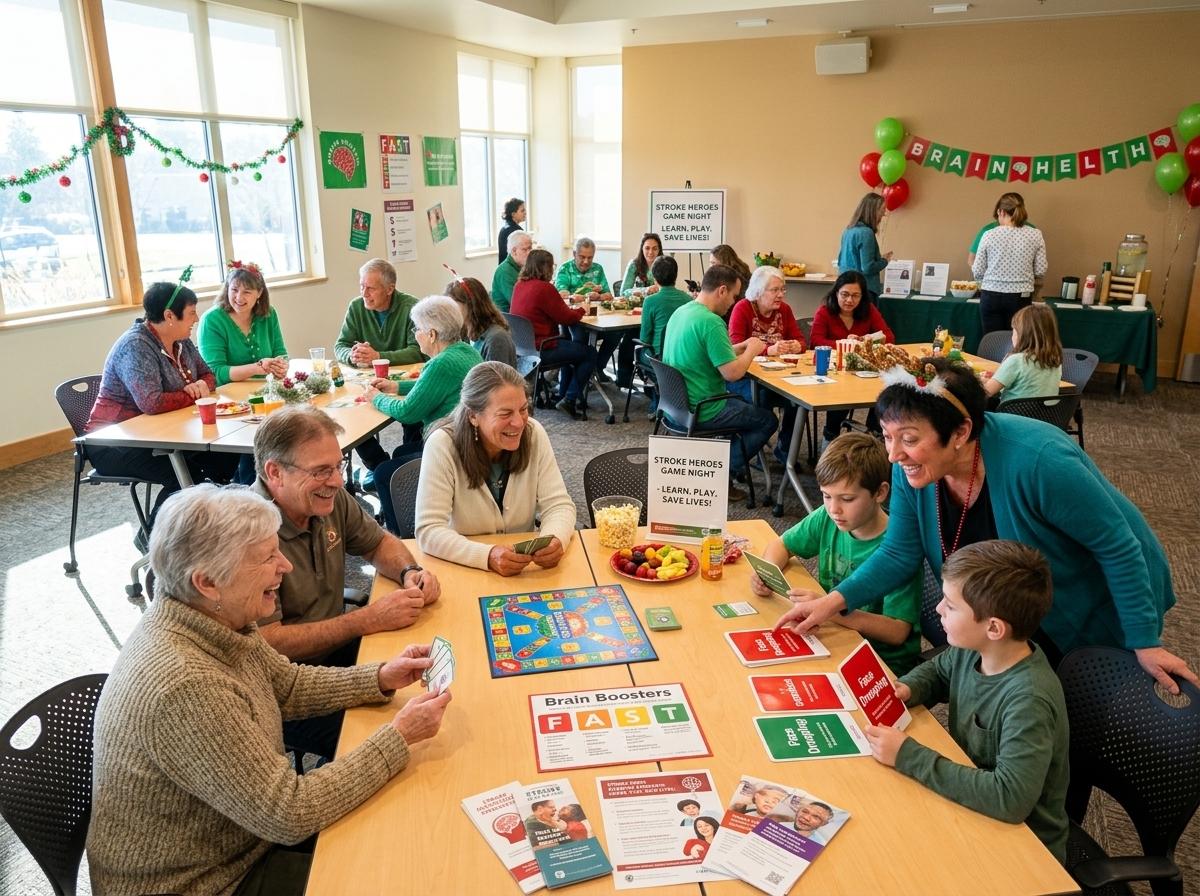
Participating in these activities can spark a deeper interest in stroke prevention and community involvement.
Download the Free Game Night Kit
Get started with a free kit designed to help families host their own stroke awareness game night. This kit includes game ideas, educational material, and step-by-step guides to ensure a successful event. Downloading this kit is a simple way to bring valuable resources into your home.
Volunteer and Support Opportunities
Volunteering with local stroke awareness organizations can extend the impact beyond your family. Explore opportunities to host community events, join support groups, or help distribute educational materials. Volunteering not only aids others but also reinforces your understanding and commitment to stroke prevention.
Share Your Experience and Inspire Others
Sharing your game night experiences can inspire others to get involved. Post photos and stories on social media, or write a blog about what you learned. By doing so, you spread awareness and motivate more families to learn about stroke signs.
Frequently Asked Questions
What are the signs of a stroke I should watch for?
Watch for sudden face drooping, arm weakness, slurred speech, and balance or vision changes. Remembering these signs can help you act fast in an emergency.
How can I teach my kids about stroke prevention?
Incorporate learning into fun activities like family game nights. Use games to explain symptoms and practice calling 911, making the process engaging and memorable.
Where can I find resources to host a stroke awareness event?
Look for free kits and materials from local health nonprofits or organizations like Stroke Awareness Oregon. These resources provide everything you need to educate and engage your community.
Why is fast action crucial when a stroke occurs?
A stroke deprives the brain of oxygen, causing damage quickly. Acting fast to get medical help can minimize harm and increase the chances of recovery.
How can I get involved with stroke awareness initiatives?
Join local volunteer groups, support educational campaigns, or donate to organizations dedicated to stroke prevention. Your involvement can make a significant impact in your community.