
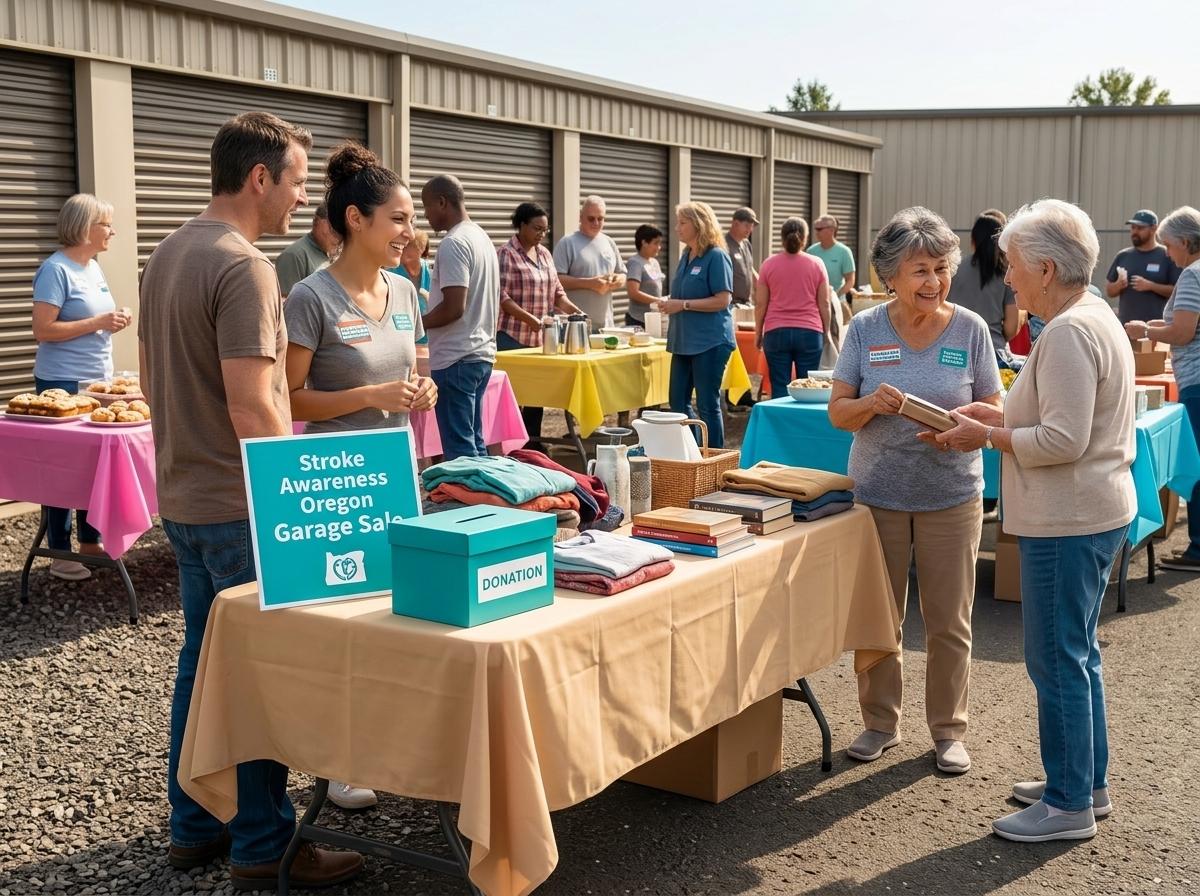
Forget ordinary garage sales. From August 13 to 15, South Side Storage on Badger Road will host a community garage sale for charity that supports Stroke Awareness Oregon. You’ll find treasures from abandoned storage units and donations, all funding vital stroke prevention education, B.E.F.A.S.T. awareness, and survivor support. Stick around to learn how your visit and donations can save lives and build stronger recovery resources. For more information, check out this post.
Community Garage Sale Details
Explore unique finds while making a meaningful impact. This community garage sale is not just an event, it’s a chance to support Stroke Awareness Oregon and learn more about stroke prevention.
Event Location and Timing
Mark your calendar: The garage sale is happening from August 13 to 15. Head to South Side Storage on Badger Road, right at the corner of Badger and 3rd Street. It’s open from 8:30 am to 3:30 pm each day, giving you plenty of time to browse and explore. Whether you’re local or visiting, this location is easy to find and offers ample parking space for all attendees.
Items to Expect at the Sale
Expect to discover a wide range of items, from hidden gems in abandoned storage units to generous donations from the community. Whether you’re searching for furniture, clothing, or collectibles, there’s something for everyone. Each purchase helps fund vital stroke education and recovery programs. So, not only will you leave with something special, you’ll also contribute to a crucial cause.
How to Donate Items
Got items to spare? Your donations can make a big difference. If you have things you’d like to contribute, drop them off during business hours at South Side Storage. They accept donations Monday through Friday from 10 am to 4 pm, and Saturday from 9 am to 3 pm. This is a great opportunity to declutter your home while supporting a vital initiative.
Support Stroke Awareness Oregon
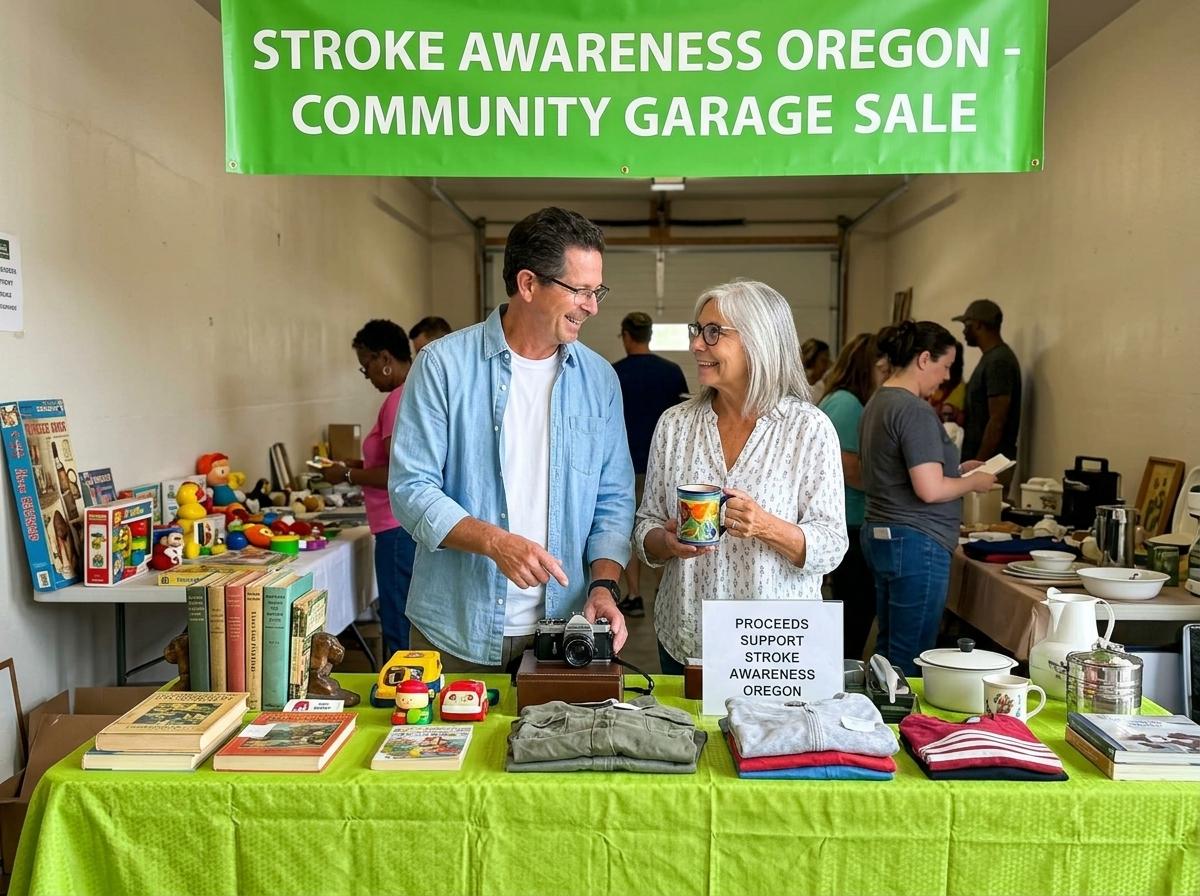
Your involvement in this event goes beyond shopping; it’s about saving lives. Learn how your purchases and actions can have a lasting impact on the community and beyond.
Importance of Your Purchases
Every dollar spent at the garage sale is more than just a transaction. It’s a step towards stroke prevention and recovery support. Funds raised will go directly to Stroke Awareness Oregon, helping to educate the public on recognizing stroke signs and providing resources for survivors. By shopping, you’re playing a direct role in reducing disability and death caused by strokes.
Volunteer Opportunities and Impact
Volunteering is a powerful way to contribute. By donating your time, you help amplify the reach and impact of Stroke Awareness Oregon. Volunteers are essential for organizing events, spreading awareness, and supporting survivors. Your involvement ensures that programs can continue to educate more people and provide essential resources. Reach out to discover how you can volunteer and make a difference.
How Donations Fund Programs
Donations are the lifeblood of Stroke Awareness Oregon’s programs. They fund educational initiatives, support groups, and community outreach efforts. These programs are crucial for equipping people with knowledge about stroke prevention and recovery. Your financial support helps maintain and expand these efforts, creating a healthier community for everyone.
Quick Guide to Stroke Awareness
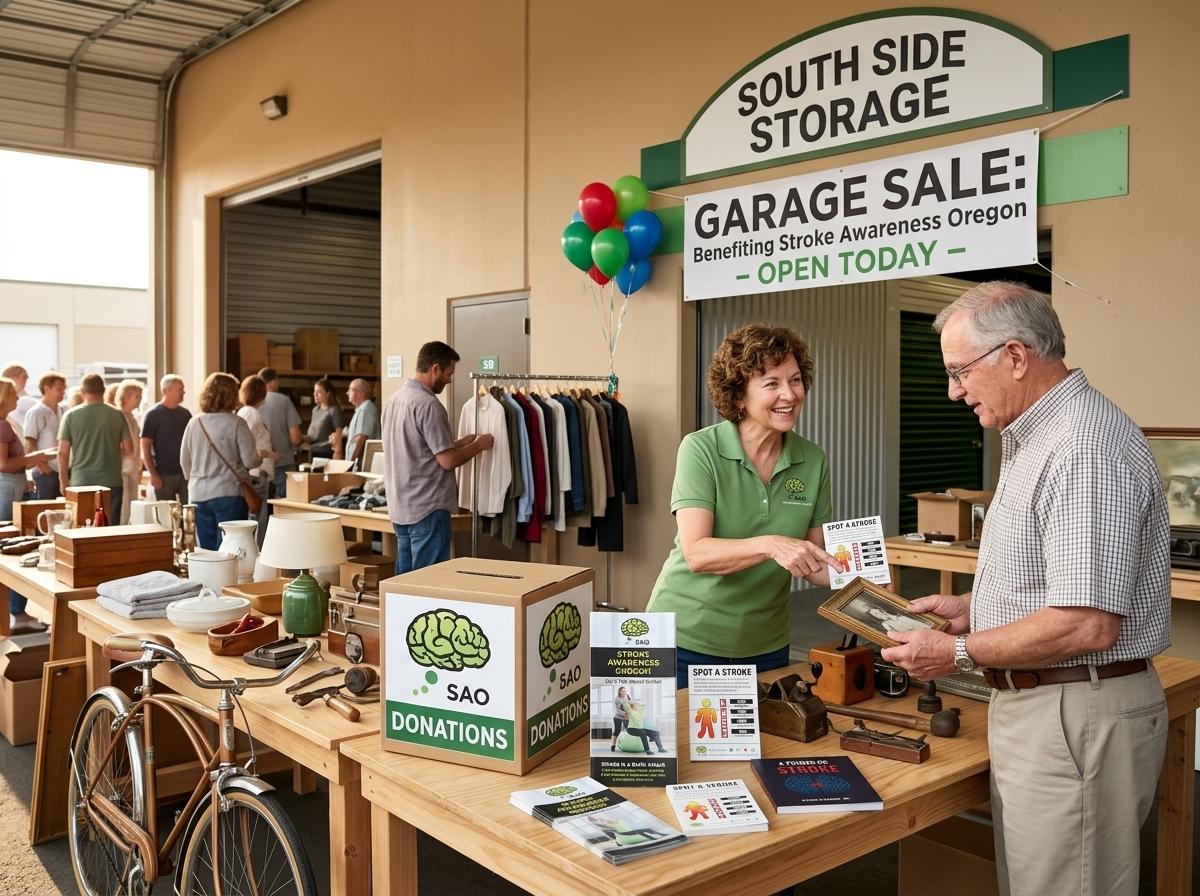
Understanding stroke signs and prevention can save lives. Here’s what you need to know to be prepared.
Recognizing F.A.S.T. and B.E.F.A.S.T. Signs
Recognizing the signs of a stroke quickly is vital. The acronym F.A.S.T. helps you remember the symptoms: Face drooping, Arm weakness, Speech difficulty, and Time to call 9-1-1. B.E.F.A.S.T. adds Balance and Eyesight changes to the list, providing a more comprehensive guide. Quick action can prevent long-term damage, so commit these signs to memory.
Essential Stroke Prevention Tips
Preventing a stroke starts with lifestyle choices. Regular exercise, a balanced diet, and managing health conditions like high blood pressure are key. Smoking cessation and moderating alcohol intake also reduce risk. These small changes can significantly lower your chances of experiencing a stroke, leading to a healthier life.
Resources for Stroke Survivors and Families
Support is crucial for stroke survivors and their families. Stroke Awareness Oregon offers resources to help navigate recovery. From support groups to educational materials, they provide the tools needed for a successful recovery journey. Reach out to find the support you or your loved ones need during this critical time.
Frequently Asked Questions
What is the purpose of the community garage sale?
The garage sale aims to raise funds for Stroke Awareness Oregon, supporting stroke prevention education and recovery programs.
How can I volunteer for Stroke Awareness Oregon?
You can volunteer by reaching out to Stroke Awareness Oregon directly to explore opportunities in event planning, outreach, and more.
What are the F.A.S.T. signs of a stroke?
F.A.S.T. stands for Face drooping, Arm weakness, Speech difficulty, and Time to call 9-1-1, crucial for recognizing stroke symptoms quickly.
Where can I find resources for stroke survivors?
Stroke Awareness Oregon provides resources, including support groups and educational materials, for survivors and their families.
Can I donate items to the garage sale?
Yes, donations are welcome. Drop them off at South Side Storage during business hours to support the sale’s cause.