

Neuroplasticity refers to the brain’s remarkable ability to reorganize itself by forming new neural connections throughout life. These new neural connections are what allows us to form new memories, learn a new language, or improve our ability to play an instrument. Certain areas of our brain are designed to control specific functions we use every day such as speech, coordinating movement, recalling a recipe, or driving the same route to work everyday. However, certain things can cause disruptions in skills we have acquired. Neuroplasticity allows the brain to compensate for injury, adapt to new situations, and respond to changes in the environment. The brain can strengthen existing neural connections or “pathways”, grow new neural connections, and “reorganize” existing networks to the new skill. These processes are influenced by experiences, learning, and environmental stimuli, allowing the brain to continually update and refine its functions.
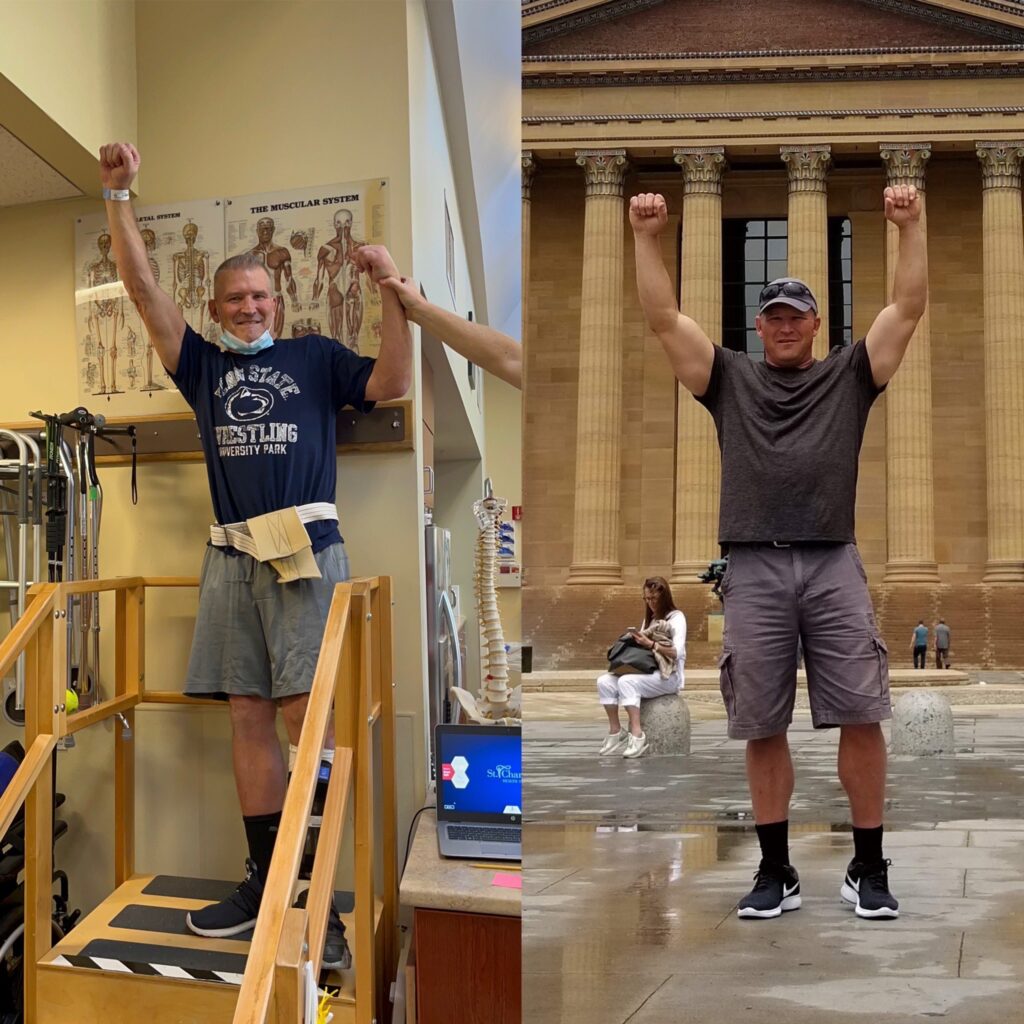
In the context of therapy after a stroke, neuroplasticity plays a crucial role in recovery. A stroke often damages specific areas of the brain, leading to loss of function in related body parts, memories, speech, sensation, and more. However, through targeted therapeutic interventions, neuroplasticity can be harnessed to help the brain “re-map” functions from the damaged areas to healthier regions. For example, repetitive physical exercises can stimulate the brain to strengthen existing neural pathways or develop new ones, helping to restore movement, coordination, and strength in affected limbs. The concept of “use it or lose it” is fundamental here—consistent, purposeful activity encourages the brain to adapt and rewire, potentially leading to significant recovery.
The challenge in rehabilitation after a neurologic injury, such as a stroke, is to harness the drivers of neuroplasticity. As an example, when our nervous system is developing as toddlers, we get thousands of repetitions of meaningful movements when we learn to walk, reach, and produce more complex fine motor skills such as catching a ball or play an instrument. That repetition or “dosing” can be difficult to replicate after a stroke. Rehabilitation disciplines like physical therapy often incorporate strategies to maximize neuroplasticity, such as task-specific training, where patients repeatedly perform movements they struggle with, or constraint-induced movement therapy, which forces the use of an affected limb. These methods, grounded in the principles of neuroplasticity, aim to create new neural circuits that can bypass damaged areas. Neuroplasticity is the scientific foundation that underpins the effectiveness of stroke rehab in helping stroke survivors regain lost functions and improve their quality of life.
The 10 Principles of Applying Neuroplasticity: