
A Stroke is a Brain Attack!
A stroke is often referred to as a “brain attack” because it occurs when blood flow to a part of the brain is suddenly cut off, much like a heart attack happens when blood flow to the heart is blocked. This interruption deprives brain cells of the oxygen and nutrients they need, causing them to die rapidly. Depending on the location and severity of the blockage or bleed, different functions controlled by that part of the brain—such as movement, speech, or vision—can be affected. Immediate treatment is critical to minimize brain damage and improve recovery outcomes.
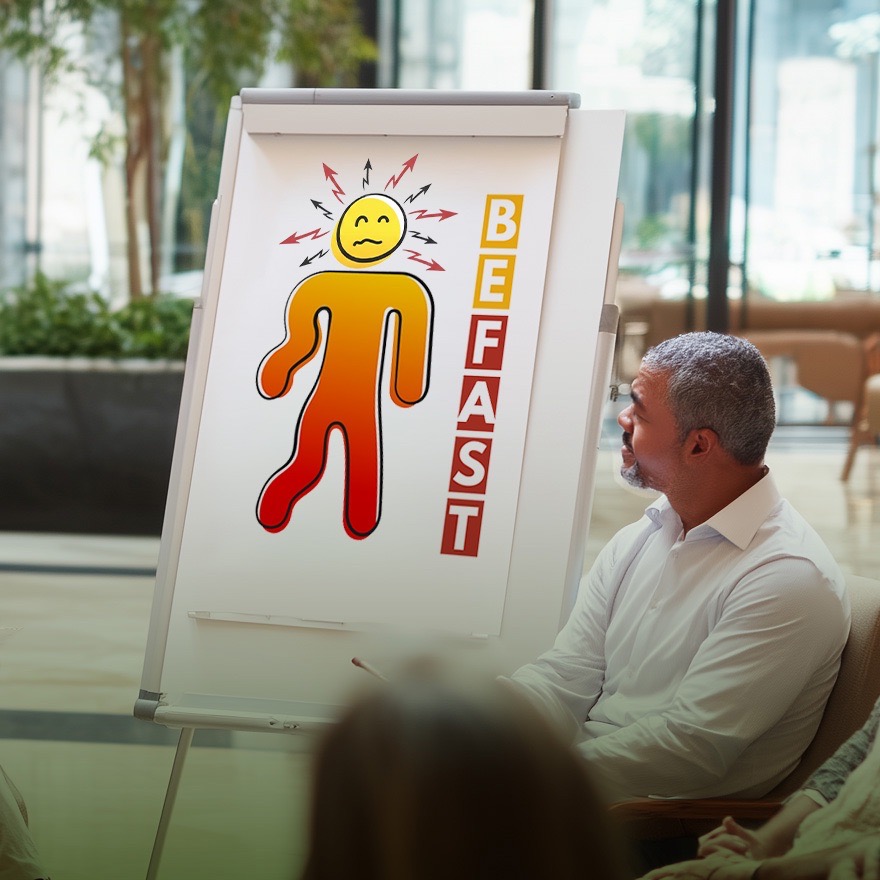
BALANCE – Sudden loss of balance and coordination. Unexplained vertigo or unsteadiness. Unexplained fall.
EYES – Sudden change in visual fields. Loss or blurred vision in one or both eyes.
FACE – Facial droop? Ask the person to smile.
ARMS – Any sudden changes/deficits or numbness of an arm or leg? Ask the person to raise both arms.
SPEECH – Sudden confusion, trouble speaking or understanding speech. Does the speech sound slurred?
TIME – Time to call 911 – because time = brain!
Time is the most important factor when responding to a stroke. Treatment within the first 3 to 4.5 hours of symptom onset can significantly reduce the risk of long-term brain damage. As soon as you recognize any BEFAST symptoms, dial 911 and report:
Communicate Effectively
When talking to the 911 operator:
According to the CDC, rapid identification and quick transport to a hospital can improve outcomes. Hospitals with specialized stroke units can provide clot-busting medications or perform life-saving procedures.
Stay with the Patient
While waiting for the ambulance, continue monitoring the patient. Stay calm and keep the person comfortable. If they lose consciousness or have difficulty breathing, the 911 operator can guide you through emergency measures such as CPR.
Time is brain—acting quickly with BEFAST and calling 911 can make a world of difference in a stroke patient’s recovery.
A Transient Ischemic Attack (TIA), often called a “mini-stroke,” occurs when blood flow to the brain is temporarily blocked, causing stroke-like symptoms that last for a few minutes to hours before resolving. Unlike a full stroke, TIAs don’t cause permanent brain damage, but they are serious warning signs. According to the American Heart Association, about one-third of people who experience a TIA will have a full stroke within a year if not treated. Identifying and responding to a TIA is crucial because it provides an opportunity to take preventive measures, such as medication or lifestyle changes, to reduce the risk of a future, potentially more severe stroke.
Because there is no way to tell if symptoms are from a TIA or a stroke, you should assume that all stroke-like symptoms signal an emergency and seek prompt evaluation. A medical professional can diagnose and treat a TIA with medication, surgery, and healthy lifestyle changes.
While a Transient Ischemic Attack (TIA), or “mini-stroke,” doesn’t cause permanent brain damage, its aftermath should not be ignored. TIAs are serious warning signs that something is wrong with blood flow to the brain. According to the American Heart Association, approximately one-third of people who have a TIA will experience a full stroke within a year if no preventative action is taken.
After a TIA, it’s crucial to consult a healthcare provider to determine the underlying cause and begin preventive treatments, such as medication, lifestyle adjustments, or procedures to reduce stroke risk. Taking these steps promptly can help avoid a more severe and potentially life-altering stroke in the future.
Thank you for your interest in Stroke Awareness Oregon! We look forward to connecting with you further. You can reach the SAO team by phone, email, or in-person at the SAO office in Bend, Oregon. If you or a loved one are displaying signs of stroke please Call 9-1-1 immediately. Time = Brain!
by Jake Sheaffer
“I once threw a canister of my supplement powder at the wall and dented it. That’s something I can’t imagine ever doing before my stroke, but it’s just another part of my recovery to work on.”
______________________________
On an early October weekend in 2019, Alesha Goodman and her longtime boyfriend Drew hiked over 50 miles of rugged desert landscape in the Ochoco National Forest in Central Oregon. They were on a nine-day hunting trip they’d been planning for months. While Drew streaked up the steep slopes of sagebrush and loose rock, Alesha tarried behind breathing heavily, fighting the searing pain radiating from the base of her skull. An active thirty-four-year-old who frequented local gyms, walked her dog daily, and hiked on weekends, Alesha never suspected the severe neck pain and nausea she’d had for the past week and a half were signs of an impending stroke. And not just one stroke, but two. Two potentially fatal strokes that would occur within an hour of each other the day after she returned from the Ochocos.
An only child, Alesha was close to her parents and her grandmother who lived on her parents’ property later in life. As a kid, she delivered newspapers in her Bend, OR neighborhood, and in her spare time, she wrote children’s books for fun and read voraciously, prompting close friends to refer to her as a “living encyclopedia of odd information.”
On the Monday morning after she got home, Alesha sat in traffic at a parkway off -ramp, still in discomfort from the neck pain and the nausea. She had new symptoms, too, dizziness and feeling faint. Regardless of the pain, she readied herself for work, but she had an uneasy feeling about her job.
Over the weekend, Alesha had received multiple text messages from her employer, a jewelry company in Central Oregon, about an issue with her company email and password, but with no cell reception, she couldn’t respond to her manager’s concerns. After searching through Alesha’s desk for her email password and not finding it, but instead finding an important legal document she’d already dealt with but had not yet disclosed to her boss, the company hired a specialist to get around the digital safeguards. That day, Alesha was let go from her position.
Purchase the Book to Learn More About Alesha’s Journey!